Table of Contents
🏕 1. Introduction: What Are 4WD Travel Trailers?
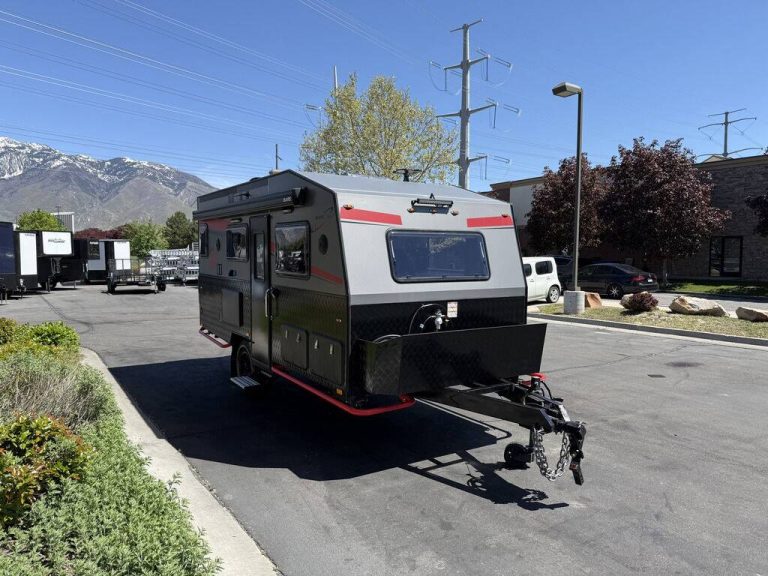
4WD travel trailers are off-road-capable camping trailers designed to be towed by four-wheel-drive vehicles, enabling access to rugged terrain such as deserts, forests, mountain trails, and remote overlanding routes.
Unlike standard travel trailers built mainly for highways and RV parks, 4WD travel trailers prioritize durability, clearance, and off-grid capability—making them ideal for dispersed camping and backcountry exploration.
Why 4WD Travel Trailers Matter Today
According to U.S. search behavior patterns, interest in off-road and self-contained travel continues to rise due to:
Increased searches for boondocking and dispersed camping
Growth of the overlanding lifestyle
Expansion of adventure tourism
More remote and flexible work arrangements
Post-pandemic preference for self-sufficient travel
Globally, demand is strongest in:
United States
Australia
Canada
South Africa
Middle East overland regions
These markets share a common need: reliable trailers that perform where paved roads end.
📚 2. Terminology & Definitions
Understanding key terminology helps buyers evaluate whether a trailer is truly off-road capable.
4WD vs AWD Tow Vehicles
4WD (Four-Wheel Drive): Designed for low-traction terrain with selectable drive modes, ideal for towing on sand, mud, or steep trails.
AWD (All-Wheel Drive): Optimized for on-road traction and light off-road use, but often limited for heavy off-road towing.
For most 4WD travel trailers, a true 4WD tow vehicle is recommended.
Off-Road Travel Trailer vs Standard Travel Trailer
| Feature | Standard Trailer | 4WD Travel Trailer |
|---|---|---|
| Chassis | Light-duty | Reinforced steel |
| Ground clearance | Low | High |
| Suspension | Road-focused | Off-road tuned |
| Tires | Highway | All-terrain |
| Usage | RV parks | Backcountry |
Overlanding Explained
Overlanding is self-reliant vehicle-based travel to remote destinations where the journey is as important as the destination. 4WD travel trailers are a natural fit for this travel style.
Articulation & Departure Angle
Articulation: Ability of the trailer and hitch to flex over uneven terrain.
Departure Angle: The angle at which the rear of the trailer clears obstacles without scraping.
Both metrics are critical for trail performance.
🌍 3. Why 4WD Travel Trailers Are Growing Globally
United States
Increased national park and public land visitation
Strong growth in dispersed camping searches
Rising interest in off-grid RV setups
Australia
Deeply established off-road caravanning culture
Long-distance Outback travel requiring durable trailers
Europe
Growing demand for compact off-road campers
Focus on lightweight and maneuverable designs
Global Insight
Worldwide demand for 4WD travel trailers is closely linked to:
Rising SUV and 4×4 ownership
Adventure tourism growth
Digital nomad and long-term travel trends
Consumer behavior trends show buyers prioritize durability, independence, and terrain versatility over luxury features.
🛠 4. 4WD Travel Trailer Buying Guide
4.1 Determine Your Travel Style
Understanding how you plan to travel helps narrow down the right trailer type.
Weekend Explorer: Short trips, light gear, moderate trails
Full-Time Overlander: Extended off-grid travel, maximum durability
Family Expedition: Space, safety, balanced storage
Remote Work Traveler: Power, connectivity, long-stay capability
4.2 Key Features to Evaluate
| Feature | Why It Matters |
|---|---|
| Ground clearance | Prevents underbody damage |
| Suspension system | Absorbs trail impacts |
| Frame strength | Long-term structural integrity |
| Water storage | Supports remote travel |
| Solar readiness | Enables off-grid energy |
| Tire compatibility | Handles diverse terrain |
4.3 Matching Trailer to Tow Vehicle
Always verify:
Tow rating and payload capacity
Hitch type and articulation
Proper weight distribution
Trailer brake compatibility
🚙 5. How to Prepare a 4WD Travel Trailer for Off-Road Use
Step 1: Pre-Trip Inspection
Adjust tire pressure for terrain
Inspect suspension and fasteners
Test electrical systems
Confirm brake calibration
Step 2: Load Distribution Strategy
Keep heavy items low and centered
Balance axle loads evenly
Secure interior cargo to prevent shifting
Step 3: Terrain Planning
Research routes and trail difficulty
Monitor weather and seasonal conditions
Calculate fuel and water range carefully
✔ 6. Off-Road Performance Checklist
Before Departure
Tire inspection
Hitch and coupler secure
Brake controller test
Recovery gear packed
During Travel
Monitor trailer sway
Check tire heat at stops
Inspect suspension after rough sections
After Trip
Clean undercarriage
Inspect frame and mounts
Tighten fasteners
📊 7. Case Studies & Data Insights
Case Study 1: Desert Overlanding (U.S. Southwest)
Key requirements:
Dust sealing
Reliable solar capacity
High water storage
Case Study 2: Australian Outback Travel
Highlights:
Reinforced suspension systems
Long-range independence
Minimal reliance on services
Survey Insights (Common Buyer Priorities)
Durability
Off-grid capability
Weight efficiency
Storage optimization
❓ 8. FAQs About 4WD Travel Trailers
Q1: Are 4WD travel trailers suitable for full-time living?
Yes, if designed for durability and off-grid support.
Q2: What makes a trailer truly off-road capable?
Reinforced frame, suspension, clearance, and tire setup.
Q3: Do I need a 4WD vehicle to tow one?
For serious off-road terrain, a 4WD tow vehicle is strongly recommended.
Q4: How do they handle sand or mud?
Proper tires, weight balance, and tow vehicle traction are essential.
Q5: Are they safe for mountain terrain?
Yes, when braking systems, weight distribution, and suspension are properly managed.
🔧 9. Maintenance & Safety Best Practices
Inspect suspension after every off-road trip
Maintain trailer brakes regularly
Rotate and inspect tires
Adjust maintenance based on climate (desert vs snow)
Store in a dry, well-ventilated area when not in use
🏁 10. Conclusion
4WD travel trailers are reshaping how people explore the outdoors—unlocking remote destinations while maintaining safety and self-reliance. Their global growth reflects a shift toward adventure-focused, off-grid travel that values preparation over convenience.
Choosing wisely, preparing thoroughly, and maintaining your setup are the keys to long-term success.
Ready to explore beyond paved roads?
Start planning your 4WD travel trailer adventure with the right preparation, safety strategy, and knowledge.