Table of Contents
Above‑the‑Fold Summary
Camping trailers — broadly referred to as camping trailer — come in several major types: Travel Trailer, Pop-up Camper, Teardrop Trailer, and Off‑road/Expedition Trailer. Each type serves different needs: lightweight travel, comfortable campground stays, off‑road adventures, or short weekend getaways. This guide will help you understand the features, pros & cons, and ideal use cases for each trailer type, and how to choose the right one for your camping lifestyle.
What Is a Camping Trailer?
A camping trailer is a towable (non‑motorized) vehicle designed for camping and overnight stays — essentially a portable lodging unit you tow behind a vehicle. It is distinct from a motorhome or van camper: you don’t drive the trailer itself. Common terms you’ll encounter are:
Travel Trailer — conventional towable trailer for camping
Pop-up Camper or Pop‑Up Trailer — foldable/expandable trailer, compact when towed
Teardrop Trailer — small, streamlined trailer, often for two people
Off‑road Trailer / Expedition Trailer — rugged trailers built for rough terrain or wilderness camping
Tow vehicle / Towing capacity — the vehicle towing the trailer must meet certain power/weight requirements
Dry weight / Gross vehicle weight (GVW) — trailer’s unloaded/loaded weights, critical for safety
With those definitions, we can look at each trailer type in detail.
Types of Trailers for Camping
Light Travel Trailers
Light travel trailer types represent the traditional and most popular form of towable camping trailers. They are generally full‑bodied, with a rigid exterior, and offer sufficient interior space for sleeping, cooking, and storage — suitable for families or small groups.
Pros:
Larger interior space — enough for sleeping, dining, even a small bathroom or kitchenette.
Good for long-distance travel and extended stays.
More stable on highways due to full‑body design.
Cons:
Heavier and require a vehicle with sufficient towing capacity.
Less maneuverable and require more storage space when not in use.
Setup and breakdown take more time compared to compact trailers.
Best for: Families or groups, long road trips, full‑season camping, comfort‑oriented campers.
Pop-up Camper Trailers
Pop-up camper trailers are foldable trailers with expandable canvas or hard‑sided compartments. When collapsed, they are compact and easier to tow; when set up, they offer sleeping and basic living space.
Advantages:
Lightweight and towable with many mid-size vehicles.
Easier storage — height and volume shrink when folded.
Lower cost and easier maintenance than full travel trailers.
Ideal for: First-time campers, budget-conscious travelers, people who want occasional camping trips without heavy towing demands.
Tradeoffs: Interior space is limited; setup and teardown needed at each campsite; comfort level is lower — not ideal for harsh weather or long-term stays.
Teardrop Trailers
The teardrop camper trailer is a compact, streamlined trailer with a distinctive “teardrop” profile. Typically designed for two people, they often include a sleeping area and a small rear hatch that opens into a basic kitchen.
Strengths:
Extremely lightweight and easy to tow even with small cars.
Minimalist, easy to store and maneuver.
Perfect for short trips, quick getaways, or couples traveling together.
Limitations: Very limited interior space, minimal amenities (often no bathroom), not ideal for families or long stays.
Best for: Couples or solo travelers on short road trips or weekend getaways, or people wanting minimal hassle.
Off‑road & Expedition Trailers
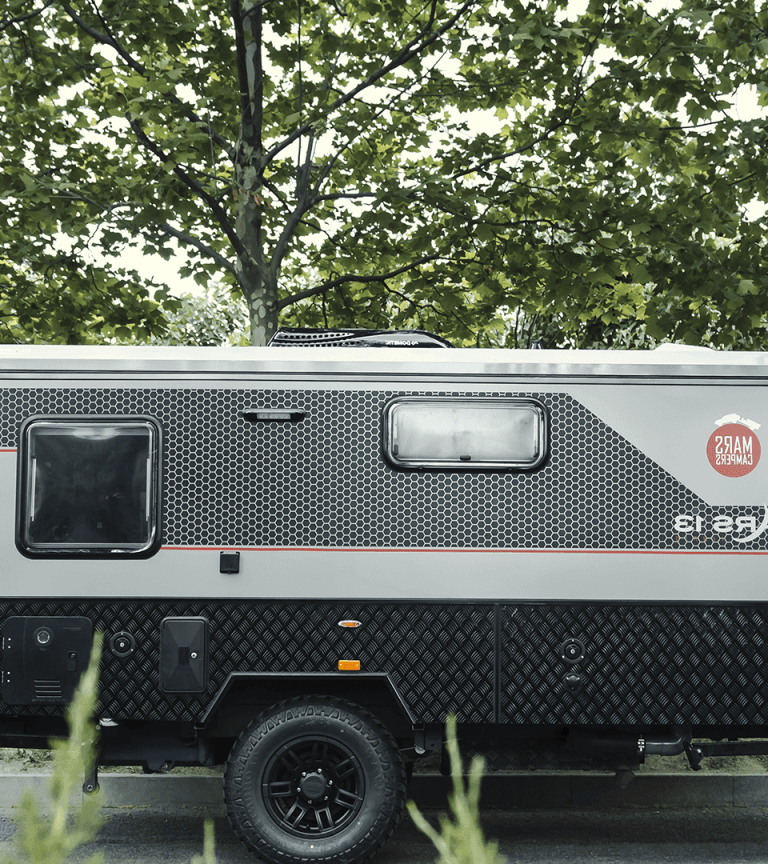
Off‑road camping trailers (also called Expedition Trailers) are built for rugged terrain, wilderness travel, and remote camping. They are typically equipped with high‑ground clearance, reinforced frames, rugged tires/suspension, and storage for supplies or gear. According to recent market reports, demand for off‑road camper trailers is rising globally, driven by increasing interest in adventure tourism and outdoor activities.
Advantages:
Designed to handle rough roads, dirt, gravel, and remote sites.
Durable build, high storage capacity, robust suspension and tires.
Great for long-term exploration, off-grid camping, and remote adventures.
Drawbacks:
Typically heavier and more expensive.
Requires capable tow vehicle and more maintenance.
Less comfortable than full-size trailers in some respects (depending on model).
Ideal for: Adventure seekers, overlanders, remote‑camping enthusiasts, off-grid travelers.
How to Choose the Right Camping Trailer — A Practical Guide
Choosing the right trailer depends on a mix of your vehicle’s towing capacity, travel habits, group size, and lifestyle preferences. Here’s a simple checklist:
Tow Vehicle Capacity — Make sure your vehicle can safely tow the trailer’s gross weight.
Travel Style:
Weekend or short trips → Pop-up or Teardrop
Long-distance travel / full camping seasons → Light Travel Trailer
Remote/off-grid adventures → Off-road Trailer
Group Size & Comfort Needs: Solo or couple? Choose Teardrop or Pop-up. Family or friends? Go Light Travel Trailer or Off‑road.
Storage & Parking: Compact trailers (Pop-up/Teardrop) require less storage space.
Frequency of Use & Maintenance: Occasional campers may prefer lightweight, low‑maintenance options.
Budget & Versatility: Pop-up and Teardrop tend to cost less and be more versatile; Off‑road and Light Travel offer more features but higher cost.
A good approach is to list your priorities (comfort, flexibility, off‑grid, car usage) and match them against trailer types — this helps narrow down to the best fit.
Global and U.S. Market Trends for Camping Trailers
Recent industry data show that the global travel trailer and camper market is rapidly growing — projected to reach over USD 200 billion by 2034, with a robust compound annual growth rate (CAGR) around 8.8%.
In the United States — the largest regional market — travel trailers currently dominate the market, but pop‑up campers are forecast to be the fastest‑growing segment over the next several years, as many new buyers seek lightweight, easy-to-tow solutions.
Meanwhile, the off‑road camper trailer market is also expanding, fueled by rising interest in adventure tourism, remote camping, and outdoor recreation globally.
These trends reflect broader behaviors in the U.S.: surveys suggest that a substantial portion of Americans plan road‑trip vacations annually, and many are seeking flexible, affordable, and mobile travel options over traditional fixed accommodations.
Thus, whether you’re new to camping or experienced, the growing diversity of trailer types gives you more choices than ever.
Pros & Cons Comparison
| Trailer Type | Pros | Cons | Best For |
|---|---|---|---|
| Light Travel Trailer | Spacious, comfortable, good for families & long trips | Heavier, need strong tow vehicle, storage/parking needs | Families, full‑season campers, long-distance trips |
| Pop‑up Camper | Lightweight, easy to tow, compact storage | Less space, minimal amenities, lower comfort | Budget-conscious, occasional campers, first‑timers |
| Teardrop Trailer | Ultra‑light, minimal tow requirements, easy parking | Very limited space, basic comfort | Couples, solo travelers, short road‑trips |
| Off‑road / Expedition Trailer | Rugged, off‑grid capable, great for remote camping | Expensive, heavy, need good tow vehicle, more maintenance | Adventure seekers, off-grid campers, remote explorers |
Common Mistakes to Avoid
Ignoring tow‑vehicle capacity — overloading towing vehicles can be unsafe.
Under‑estimating parking/storage needs — large trailers need suitable space.
Misjudging group size or comfort needs — small trailers may not suit families.
Expecting off-road capabilities from light trailers — pop‑ups/teardrops aren’t built for rough terrain.
Neglecting maintenance, waterproofing, and seasonal storage requirements.
Frequently Asked Questions
What is the difference between a travel trailer and a pop-up camper?
Travel trailers offer rigid structure and more living space; pop‑up campers fold down for easy towing and storage but offer less space and comfort.
Can a regular car tow a teardrop trailer?
Yes — teardrop trailers are lightweight and often towable with many standard cars, as long as towing capacity requirements are met.
Are pop-up campers good for winter camping?
Not usually—pop‑ups offer less insulation and stability in cold weather compared to full travel trailers or off‑road trailers.
What trailer type is best for off‑road adventures?
Off‑road / expedition trailers are designed for rugged terrain, remote campsites, and off‑grid travel.
How many people can typically sleep in a travel trailer vs a teardrop?
Travel trailers often sleep 4–6 or more; teardrops usually sleep 2.
Are off‑road trailers worth the extra cost and weight?
If you plan frequent off‑grid trips or rugged adventure travel, yes — for durability, storage, and off-road capabilities.
Do pop-up campers require special storage space?
They’re easier to store than full-size travel trailers, but you still need a driveway or a covered space for offseason storage.
What maintenance is needed for camping trailers?
Regular checks for leaks, tires, brakes, towing hitch, weather sealing; cleaning and winterizing if unused for long periods.
Conclusion & Recommendations
Choosing the right type of trailer for camping starts with your lifestyle, travel habits, and towing capacity. If you need space and comfort for long trips with family — go with a Light Travel Trailer. If you prefer flexibility, lightweight towing, and occasional weekend trips — a Pop‑up Camper or Teardrop Trailer is great. For adventure enthusiasts and off‑grid travel, an Off‑road/Expedition Trailer gives the ruggedness and durability needed.
Given current U.S. and global market trends — rising interest in outdoor recreation, lightweight trailers, and off-grid adventure trailers — now is a great time to explore your options. Whether you’re a seasoned camper or new to the lifestyle, there’s a trailer type that fits.
For more detailed advice on maintenance, packing lists, and travel planning for your camping trailer adventures, check out our companion blog at https://www.marsrvs.com/blog.