Table of Contents
1. What Is a Rugged Camping Trailer? (Terminology & Definitions)
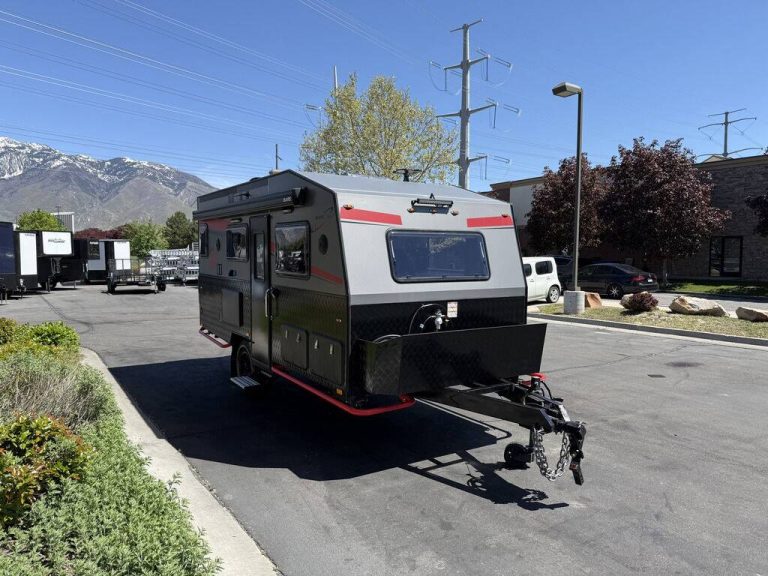
A rugged camping trailer USA refers to trailers explicitly engineered for off‑road and remote camping environments — far beyond paved campgrounds. These trailers prioritize durability, terrain capability, and self‑sufficiency compared to traditional travel trailers.
Definition: Rugged Camping Trailer USA
A rugged camping trailer is a towable unit designed to handle unpaved roads, uneven trails, and remote boondocking sites. These trailers often share features with all‑terrain overland camping trailers USA and off‑road expedition camping trailer USA categories, including reinforced chassis, independent suspension, and power systems suited for extended off‑grid stays.
How They Differ from Traditional Travel Trailers
Standard travel trailers work well on highways and serviced campgrounds but lack reinforcement for repeated off‑trail abuse. In contrast, rugged trailers include:
Structural reinforcements (steel/aluminum frames)
High ground clearance and all‑terrain tires
Advanced suspension for rough terrain
Enhanced weatherproofing and off‑grid power/back‑up systems
Subtypes Explained
All‑Terrain Overland Camping Trailers: Geared for a mix of road and off‑road use, balancing ruggedness with comfort.
Expedition Trailers: Built for long‑distance, extended journeys into remote regions (often with high‑capacity storage and self‑sufficient power systems).
Pop‑Up Rugged Trailers: Lightweight trailers with expandable space; best for users seeking a balance of off‑road capability and compact storage.
2. Why Rugged Camping Trailers Matter in the USA
Growing Off‑Road & Wild Camping Trends
U.S. outdoor culture shows strong growth in dispersed camping and off‑grid adventures — many travelers now prefer boondocking and remote stays over traditional campgrounds. In recent years, the share of U.S. camping nights spent off‑grid has increased significantly, reflecting a major shift in recreational camping behavior.
Geographical Drivers in the USA
Rugged camping trailer interest is especially strong in states with abundant public lands and backcountry access — like Colorado, Utah, Arizona, and California. These regions’ landscapes — including deserts, mountains, and forests — create natural demand for trailers built to handle off‑trail conditions.
Global Market Context
Globally, rugged and off‑road camping trailers are expanding as outdoor recreation and overlanding grow in Europe, Australia, and Asia‑Pacific. The U.S., with its vast landscapes and strong outdoor culture, remains a leading market while emerging regions adopt lighter, modular designs.
3. Key Features of All‑Terrain & Off‑Road Trailers (Design Traits)
For an all‑terrain overland camping trailer USA or a heavy‑duty 4×4 rugged camping trailer to perform well, certain core design elements are essential.
A. Chassis & Suspension
Reinforced Chassis: Heavy‑duty alloy or steel frames designed to resist twisting and impacts on rough terrain.
Independent Suspension Systems: Off‑road trail–optimized suspension reduces vibrations and improves stability on washboard, rocky, or uneven trails.
B. Tires & Ground Clearance
All‑Terrain Tires: Provide traction across dirt, sand, and gravel surfaces.
High Ground Clearance: Helps avoid undercarriage damage on rough trails.
C. Weatherproof & Self‑Sufficient Systems
A truly rugged trailer incorporates:
Solar panels and battery banks for power independence
Water storage and filtration for dispersed camping
Weather‑sealed walls and roof systems for extreme conditions
Efficient insulation for varying climates
4. How to Choose the Right Rugged Camping Trailer
Selecting the right trailer requires matching your adventure profile with trailer capabilities.
4.1 Checklist: What to Consider
Towing Compatibility: Ensure your vehicle (SUV, truck) can safely tow the trailer’s weight.
Payload & Build Quality: Higher payload capacity enables more gear and resilience.
Terrain Type: Tailor chassis and suspension specs to desert, mountain, or forest trails.
4.2 Step‑by‑Step Selection Process
Evaluate Your Adventure Type: Weekend escapes vs. extended backcountry expeditions dictate different needs.
Map Terrain & Duration: Longer, rougher routes require better suspension and off‑grid systems.
Trailer & Vehicle Matching: Check towing ratings, brake systems, and hitch compatibility.
Safety & Compliance: Verify trailer lights, brake controllers, and safety chains meet U.S. road standards.
5. Step‑by‑Step Setup & First Use Guide
Preparing your rugged trailer for its first journey is straightforward with the right steps.
Trailer Prep Before Departure
Inspect tires, suspension, and hitch connections
Charge batteries and test solar systems
Pack water and fuel reserves
Review safety gear (first‑aid, recovery kits)
Camp Setup on Arrival
Park on level ground.
Stabilize trailer with jacks and leveling blocks.
Connect power and configure off‑grid equipment (solar setup, batteries).
Set up awnings, tents, and cooking areas.
Basic Safety Checks
Ensure breaks and lights function
Secure stored gear
Test communication devices (radio, satellite)
Review weather conditions
6. Real‑World Use Cases & Market Trends
Typical Use Scenarios
Desert Through‑Trips: High ground clearance and abrasion‑resistant tires handle sand and washboard roads.
National Forest Expeditions: Independent suspension smooths rough dirt tracks for multi‑day treks.
Remote Photography or Nature Research: Power independence enables long stays without hookups.
Outdoor Recreation Growth & Data
Outdoor recreation — including boondocking and overlanding — is one of the fastest‑growing camping segments in the U.S., with off‑grid camping nights doubling in recent years.
Comparing Terrain Performance
| Terrain | Key Trailer Features Needed |
|---|---|
| Desert | High clearance, heat‑resistant materials |
| Mountain | Advanced suspension, brake control |
| Forest | Compact, maneuverable chassis |
| Snowy/Cold | Insulated interiors, efficient battery |
7. Common Questions
What Makes a Camping Trailer “Rugged”?
A trailer is “rugged” if it is structurally reinforced and equipped to travel off paved roads and withstand environmental extremes.
Can Any SUV Pull a Rugged Camping Trailer?
Not necessarily. Always check towing ratings. Many rugged trailers have heavier setups, requiring trucks or SUVs with higher tow capacities.
Are Rugged Camping Trailers Good for Year‑Round Use?
Yes — especially models with weatherproofing, insulation, and independent power systems.
Do Rugged Camping Trailers Require Permits?
Generally no special permits are required beyond standard vehicle towing laws, but certain public lands may have specific permits for backcountry camping.
8. Summary & Next Steps
The rugged camping trailer USA landscape is expanding rapidly due to surging interest in off‑grid travel, overlanding, and dispersed camping. With the right trailer, adventurers can access remote environments that were once difficult to reach, enjoying nature on their terms.
Next Steps for Readers:
Assess your typical adventure routes and vehicle towing capacity.
Explore blog resources like the Future Trends in Travel Trailer Industry to stay updated on market insights.
Try local boondocking trips before committing to long expeditions.