Table of Contents
1. What is an Off Road Camper?
1.1 Off Road Camper Defined
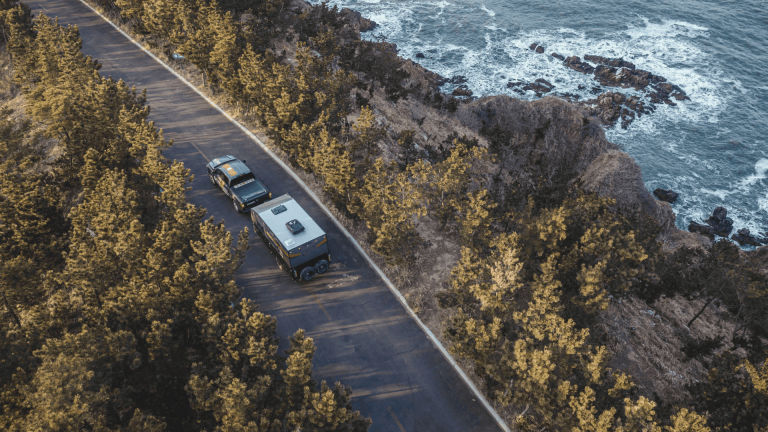
An off road camper is a camping trailer or camper specifically engineered to traverse rough terrain such as deserts, forest tracks, washboard roads, and mountainous trails—surpassing the capabilities of standard RVs and conventional travel trailers. Unlike regular campers that perform well on paved roads and maintained campgrounds, off‑road campers are built for remote, unpaved, and rugged environments.
Their key differentiators include reinforced chassis, independent suspension systems, increased ground clearance, and durable exterior seals. These features enable adventurous travel deeper into nature, far from established campgrounds.
1.2 Key Terminology Explained
Understanding the technical language around off‑road campers is critical:
Ground Clearance: The vertical space between the lowest point of the camper and the ground—high clearance ensures fewer obstacles are hit on uneven terrain.
Suspension Travel: The distance the suspension system can compress and rebalance—longer travel improves comfort and wheel articulation off‑road.
Approach & Departure Angles: Measures of how steep a slope can be climbed or descended without the front or rear hitting the ground.
Four‑Wheel Drive vs All‑Terrain Capability: 4WD describes vehicle drivetrain capability; all‑terrain reflects the design intent of both tow vehicle and trailer.
Waterproofing & Dust Sealing: Weatherproofing standards to protect interior systems and living space against moisture and airborne dust.
This foundation enables deeper understanding of global market trends and design comparisons.
2. Off Road Camper Global Adoption Trends
2.1 Market Distribution & Adoption Rates
Off‑road camping is no longer a localized hobby—it’s a global outdoor lifestyle trend with distinct regional characteristics:
North America: Dominates global adoption thanks to abundant public lands, widespread SUV/truck ownership, and mature recreational vehicle culture.
Europe: Emphasizes lightweight construction and regulatory compliance, catering to narrow roads and strict towing laws.
Australia & New Zealand: Faced with some of the harshest outback conditions, these markets drive innovation in rugged, expedition‑grade off‑road campers.
Asia‑Pacific: Emerging demand from growing middle classes and domestic adventure tourism.
Off‑road camper adoption reflects broader cultural shifts toward self‑reliant travel, extended boondocking (camping without hookups), and exploring remote landscapes.
2.2 Trends Data & Statistics
Here’s a high‑level overview of recent trends:
| Region | Off‑Road Camper Search Growth | Trail Network Expansion | Preferred Terrain |
|---|---|---|---|
| North America | High (seasonal peaks) | Extensive | Mountain, Desert, Forest |
| Europe | Moderate | Growing | Forest, Hillsides, Coasts |
| Australia | Strong | Increasing | Outback, Unsealed Tracks |
| Asia Pacific | Emerging | Expanding | Mixed (Forests, Hills, Plains) |
3. Off Road Camper Design Features Comparison
A well‑designed off‑road camper balances rugged capability with comfort. Below is a comparison of key features by use case:
3.1 Essential Design Modules
Chassis & Suspension: Heavy‑duty frames with independent suspension deliver smoother off‑road travel.
Body Materials & Seals: Corrosion‑resistant metals and premium seals keep elements out.
Living Space Layout: Efficient use of space for sleeping, kitchen, and storage without excess bulk.
3.2 Feature Comparison by Use Case
| Feature | Heavy Off‑Road Routes | Long‑Distance Camping | Snow/Mountain Terrain |
|---|---|---|---|
| Suspension System | ✔️ | ⚠️ | ✔️ |
| Insulation & Weatherproofing | ⚠️ | ✔️ | ✔️ |
| Living Comfort Focus | ⚠️ | ✔️ | ⚠️ |
This table helps users assess which features matter most based on their intended adventure style.
4. Off Road Camper Trailer Guide: How‑To Setup & Deploy
Optimizing an off road camper trailer setup begins long before rolling off the pavement.
4.1 Preparation & Checklist
Vehicle Matching: Ensure your tow vehicle (SUV or truck) has sufficient towing capacity and off‑road capability.
Safety Gear: Recovery tools, spare parts, heavy‑duty tires, and emergency kits.
Power & Water: Solar panels and lithium battery systems for extended off‑grid stays.
4.2 Expert Operational Steps
Route Planning & Weather Review – Assess trail difficulty and seasonal weather.
Vehicle Baseline Setup – Adjust tire pressures, secure attachments, and balance loads.
Terrain Techniques – Navigate sand, rock, and mud using adaptive speed and wheel placement.
Campsite Setup – Level the camper, protect surrounding environment, and set up sustainable waste systems.
5. Best Setup Tips for Off Road Campers
5.1 Layout Optimization
Functional Zoning: Separate cooking, sleeping, and gear.
Weight Balance: Heavy items should be centered and low to maintain towing stability.
5.2 Safety & Survivability
Water & Dust Protection: Seals and vents designed for extreme environments.
Structural Support: Sturdy jacks and stabilizers reduce swaying and discomfort.
6. Popular Routes & Camper Use Cases
Off‑road campers are used across iconic landscapes:
Moab & BLM Lands (Utah/Arizona): Dispersed camping and scenic trails.
Colorado San Juans: Remote forest routes ideal for deep‑wilderness camping.
Across these routes, off‑road campers allow access far beyond traditional RV terrain.
7. FAQ – Off Road Camper Insights
Q: What is the biggest difference between an off‑road camper and a standard travel trailer?
A: Off‑road campers are built with reinforced frames, higher clearance, and suspension systems designed for rugged terrain.
Q: How should beginners choose their first off‑road camper?
A: Start by evaluating your most frequented terrain and choose features that match ground clearance, suspension needs, and off‑grid capabilities.
8. Summary
The off road camper market continues to expand globally, driven by adventure tourism, advanced materials, and a cultural shift toward immersive outdoor experiences.