Table of Contents
First-Screen Answer
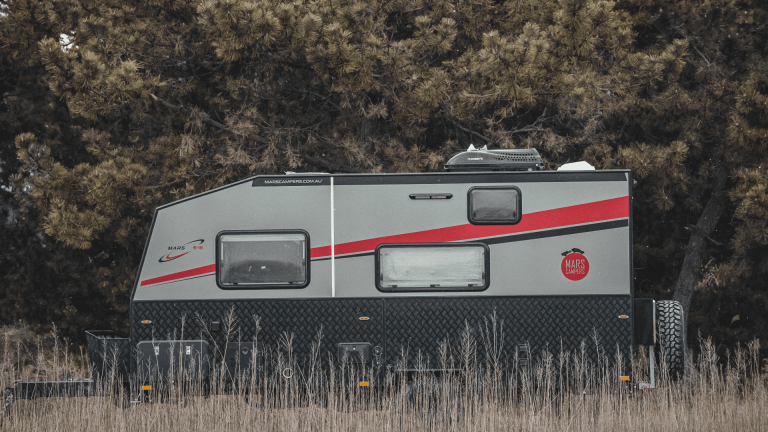
A Mars camper refers to the hybrid and off-road camper trailers produced under the Mars brand, known for durability, independent suspension, and rugged construction designed for rough tracks and long-distance touring. Outdoor travelers choose Mars campers for their blend of comfort and capability—hard-shell or pop-top designs, modular kitchens, off-grid power systems, and strong chassis engineering. These campers attract families, overlanders, and adventurers seeking a reliable towable solution for remote travel. While Australia remains the brand’s strongest and most established market, interest in Mars-style hybrid campers is rising globally as off-grid travel grows. See Mars models and technical features below.
Introduction — Global Market Snapshot
The global demand for off-road and hybrid campers has surged as more travelers embrace overlanding, remote tourism, and self-sufficient camping. Around the world, outdoor consumers are shifting from traditional caravans to compact, durable campers that can handle rough terrain while supporting comfortable living. This shift is fueled by growing interest in national park touring, off-grid exploration, and multi-day adventure travel.
Australia stands at the center of this market, maintaining one of the world’s most mature off-road camper industries. Brands like Mars Campers helped shape the category, popularizing hybrid hard-floor and pop-top designs that combine strength with convenience. Meanwhile, North America is rapidly catching up, driven by 4×4 culture, boondocking, and expanding public-land access. Europe favors compact hybrids that can maneuver narrow alpine roads, while Asia—especially Japan, China, and South Korea—is experiencing fast growth behind new car-camping lifestyles.
Several global trends define the market: the rise of hybrid campers, increased adoption of solar and lithium battery systems, demand for family-friendly interior layouts, and innovations like automated or inflatable setups. These trends demonstrate how the Mars-style camper concept has evolved into a global standard for off-road readiness.
What Is a Mars Camper?
A Mars camper is an off-road or hybrid camper trailer designed for rough-track touring, family adventures, and extended off-grid living. Built with reinforced chassis systems, independent suspension, and modular interiors, Mars campers are engineered to be towed by SUVs or 4×4 vehicles while offering comfortable sleeping, cooking, and storage solutions.
Mini Glossary of Key Terms
Independent suspension — Provides greater wheel articulation and smoother towing on rough terrain.
A-frame chassis — A reinforced front chassis design that improves structural strength.
Articulating hitch — A 360° hitch designed for uneven terrain and safer off-road towing.
MPPT solar controller — Manages solar input efficiently for lithium or AGM batteries.
Lithium battery bank — Lightweight, high-capacity storage ideal for off-grid use.
Hard-shell vs pop-top — Hard-shell offers rigidity; pop-top allows lower towing height.
Departure/approach angle — Measurement that defines a camper’s off-road clearance capabilities.
Many modern Mars-style campers include innovations such as inflatable frames or automated setup systems, reducing camp setup time and supporting easier family use.
Types & Models
1. Compact / Entry Hybrid Campers
Ideal for weekend getaways and light off-road touring.
Key features:
Lightweight towability for midsize SUVs
Quick setup with pop-top or hybrid folding design
Efficient layouts for small families or couples
2. Mid-Range Off-Road Campers
Designed for regular off-road adventures and multi-day touring.
Key features:
Reinforced chassis with independent suspension
Larger water and energy storage for longer off-grid stays
Upgraded kitchens, awnings, and living modules
3. Expedition / Overland Models
Built for challenging terrain and long-range travel.
Key features:
Extended battery banks and large solar input
Heavy-duty underbody protection and recovery points
Enhanced approach/departure angles for rugged routes
4. Innovative / Automated Setup Models
Examples include inflatable-frame or air-assisted campers.
Key features:
Minimal setup time—ideal for family or frequent movers
Modular rooms and awnings
Hybrid layouts combining hard-shell security with tent-like expansion
Global Market Overview — Regional Insights
Australia
Australia represents the world’s most advanced off-road camper market, with Mars Campers being a well-known brand in hybrid and off-road trailer manufacturing. The region’s harsh landscapes—deserts, corrugated roads, and remote outback routes—drive demand for strong chassis construction, independent suspension, and reliable off-grid systems.
North America
Interest in off-road and hybrid campers is rising quickly. Some U.S. vendors operate under the “Mars” name, and the growing popularity of overlanding has increased demand for independent suspension, lithium systems, and compact but capable trailers. Forest access roads, BLM land, and national park touring fit the hybrid camper category well.
Europe
European markets prefer compact, lightweight hybrid campers suitable for narrow roads and alpine routes. Four-season capability and efficient thermal insulation are major selling points due to colder climates.
Asia (Japan, Korea, China)
Asia is experiencing rapid growth in car-camping and outdoor lifestyle trends. Many consumers are urban-based travelers looking for modular, space-efficient off-road campers for weekend adventures.
Emerging Segments
Winterized off-road models
Luxury “glamping” off-road hybrids
Aftermarket solar and lithium upgrades
Key Features & Technology to Highlight
1. Chassis & Suspension
Hot-dip galvanized A-frame
Independent trailing-arm suspension
Long-travel shock absorbers for rough terrain
2. Off-Grid Energy Systems
MPPT solar charging
Lithium battery banks
12V distribution with inverter options
Optional dual solar panels for extended stays
3. Living & Kitchen Systems
Slide-out stainless-steel kitchens
External or hybrid-style cooking areas
Hard-shell or pop-top cabins
Optional rooftop tent or bunk modules
4. Durability & Protection
Underbody bash plates
Anti-corrosion coatings
Recovery points and high-clearance design
5. Automated or Air-Assisted Setup
Inflatable frame systems
Powered stabilizers
Quick-deploy awnings ideal for family use
How to Choose the Right Mars Camper (Step-by-Step Checklist)
Define your travel style: Weekend touring or multi-week expedition?
Check tow-vehicle capacity: Match trailer weight, hitch height, and braking system.
Pick the right suspension level: Standard independent vs reinforced long-travel.
Evaluate off-grid power needs: Choose solar and battery capacity based on appliances.
Optimize sleeping arrangements: Family bunks, couple layouts, or expandable rooms.
Assess water and storage: Match tank size to trip length and remote destinations.
Consider weather conditions: Need winterization? Insulation? All-weather awning?
Plan for recovery gear: Traction boards, spare wheels, jack points.
Mars Overland Setup — Practical Step-by-Step Guide
Pre-Trip Prep
Inspect wheel bearings and suspension components.
Torque hitch connections and lug nuts.
Charge batteries and test solar input.
Loading the Camper
Maintain proper tongue weight for stable towing.
Place heavier gear low and centered.
Secure tall or loose items to prevent shifting.
Electrical Setup
Confirm solar panels are clean.
Pre-cool fridge 24 hours before departure.
Verify inverter and 12V outlets are functional.
On the Trail
Reduce speed on corrugated or rocky tracks.
Use proper recovery etiquette when needed.
Monitor tire pressure and vehicle temperatures.
Post-Trip Maintenance
Rinse dust, salt, and mud from underbody.
Lubricate hinges, shocks, and moving parts.
Check suspension bushings and seals.
Common Problems & Fixes
| Issue | Likely Cause | Simple Fix |
|---|---|---|
| Trailer sway | Incorrect tongue weight | Rebalance load; consider sway control |
| Battery drain | Parasitic draws or worn battery | Upgrade to lithium + MPPT; add solar |
| Seal leaks | Gasket wear or seam aging | Re-seal door and roof seams |
| Suspension wear | Heavy off-road use | Replace shocks/bushings during routine service |
Case Studies / Real-World Examples
1. Australian Outback Convoy
A convoy traveling across the red desert relied on hybrid off-road campers with strong suspension and heavy-duty chassis. Drivers reported smoother towing and reduced fatigue over long corrugated roads, demonstrating why hybrid campers dominate the Australian market.
2. U.S. Weekend Overlanding
A family exploring national forest trails used a Mars-style hybrid camper for quick setups and comfortable sleeping arrangements. With slide-out kitchens and a pop-top roof, the camper performed well on uneven fire roads and small campgrounds.
3. European Narrow-Road Touring
In the Alps, a compact hybrid camper proved ideal for narrow switchbacks and tight village roads. Its lightweight construction and low towing height made it easy to maneuver while still offering warm, insulated living spaces.
FAQ
1. What is a Mars camper?
A Mars camper is an off-road or hybrid camper trailer designed for rugged touring and comfortable off-grid living.
2. Are Mars campers suitable for true off-roading?
Yes. Most models use independent suspension, reinforced chassis, and high-clearance designs built for rough terrain.
3. Can I add more solar power to a Mars camper?
In most cases, yes. Many models support expanded solar arrays or upgraded lithium systems.
4. Are Mars campers family-friendly?
Hybrid layouts, bunk options, and modular kitchens make them suitable for couples and families.
5. What tow vehicle do I need?
A midsize SUV or 4×4 is suitable for many hybrids, but always check towing capacity.
6. How do I winterize a Mars camper?
Drain water systems, insulate lines, and ensure proper battery storage before cold-weather storage.
7. How often should suspension be serviced?
After heavy off-road use, inspect every major trip; otherwise follow a standard annual service.
8. Can I use a Mars camper for long-distance expeditions?
Yes. Many models are engineered with off-grid energy, durable construction, and storage for multi-week travel.
Conclusion
Mars campers represent a powerful blend of durability, comfort, and off-grid capability—traits that resonate across global adventure markets. Whether used for Australian outback crossings, American overlanding routes, or European mountain touring, these hybrid and off-road campers offer a reliable platform for travelers seeking freedom beyond paved roads. With strong chassis engineering, independent suspension, modular living spaces, and innovative features like inflatable frames, Mars-style campers continue to define the modern off-road camping experience. As global interest grows in self-sufficient travel, the Mars camper category is perfectly positioned to support adventurers who want to explore further, stay longer, and travel more comfortably.