Table of Contents
What Is a Lightweight Off Road Camper?
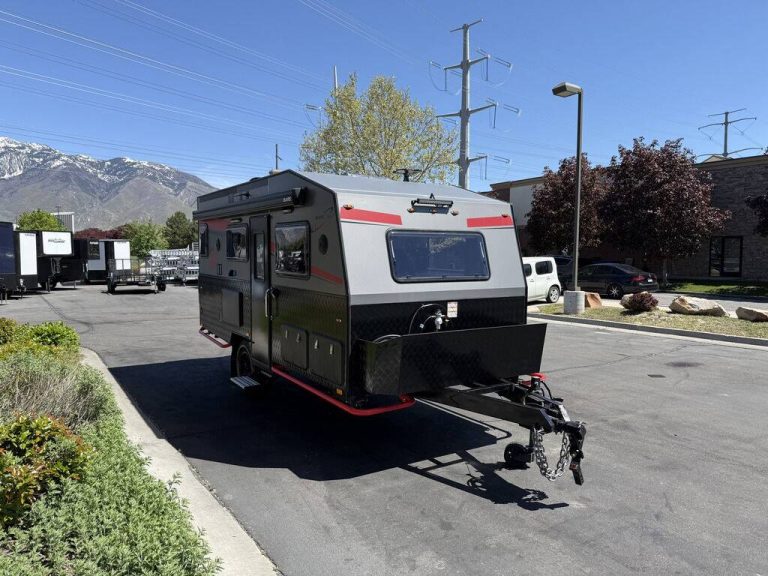
A lightweight off road camper is a compact towable or mountable camping unit engineered for rugged conditions and easy towing. Unlike traditional travel trailers, these campers are built with weight‑efficient materials like aluminum frames, composite panels, and independent suspension systems that balance strength with low mass — making them ideal for smaller 4×4 vehicles and SUVs.
Recent trend data shows manufacturers increasingly emphasize lightweight materials and smart power systems as core selling points, reflecting growing consumer interest in move‑anywhere rigs that support extended boondocking and off‑grid travel.
Why Lightweight Off Road Campers Are Trending
Adventure & Freedom
Outdoor recreation trends show a shift away from traditional campgrounds toward dispersed, wilderness, and backcountry camping. In the U.S., boondocking (off‑grid camping) accounted for about 44% of camping nights in 2025, more than any single campground category, driven by demand for solitude and nature access.
Sustainability & Efficiency
Consumers are prioritizing lightweight designs that improve fuel efficiency and reduce environmental impact. Lower overall mass reduces towing energy demands and enables efficient integration of solar panels and off‑grid power systems — a key search interest trend.
Vehicle Compatibility
The explosion in mid‑size SUV ownership (e.g., Toyota 4Runner, Honda CR‑V) has coincided with interest in campers that can be towed by these vehicles. New models like the Honda Base Station towable prototype under 1,500 lbs illustrate how many SUVs can now safely tow lightweight rigs without specialized trucks.
Terminology & Definitions
Understanding key terminology helps clarify what to look for when choosing a lightweight off road camper:
Off Road vs Overland vs Car‑Camping
Off Road: Designed for rugged, unpaved terrains with reinforced chassis and suspension.
Overland: Implies extended remote expeditions, often requiring self‑sufficient systems.
Car‑Camping: Casual camping near roads or campgrounds with minimal off‑road capability.
Important Technical Terms
GVWR (Gross Vehicle Weight Rating): The maximum safe operating weight of the camper including cargo.
Dry Weight: The camper’s weight without fluids or payload.
Approach/Departure Angles: Indicators of how well a camper handles steep terrain.
Payload: The weight you can safely add (gear, water, supplies).
4×4 Compatibility: Whether your vehicle’s drivetrain can manage towing influence off‑road.
Suspension & Tires: Key for stability and durability on uneven surfaces.
Global Market Overview
North America (USA & Canada)
North America leads in demand due to its vast public lands, overland culture, and strong RV market. The trend toward lightweight campers corresponds with outdoor recreation growth, and many travelers now seek rigs that enable deeper expeditions rather than relying on campgrounds.
Europe (Alps & Scandinavia)
In Europe, the focus is on compact, aerodynamic designs suited to narrow mountain roads and fuel efficiency. Campers here often emphasize smart use of interior space and stability for alpine terrain.
Australia & New Zealand
Australia’s harsh outback conditions demand campers with robust frames, dust‑proofing, and heat‑resistant materials — all while remaining lightweight for longer distances and fuel economy.
Asia (Japan & Middle East)
Regions with increasing SUV ownership see emerging interest in lightweight off road campers. Their compact size suits narrower roads and matches local lifestyle shifts toward weekend outdoor adventures.
Best Configurations by Use Case
Choosing the right configuration depends on your adventure style and vehicle:
Overland 4×4 Vehicle Fitments
Lightweight campers designed for 4×4 travel incorporate reinforced frames and high‑clearance suspensions for rugged terrain.
Lightweight Off Road Camper Trailers
Compact trailers that pair well with mid‑size SUVs and trucks — ideal for couples or solo travelers prioritizing agility and fuel economy.
Rooftop Solutions
Some campers use rooftop tents for lightweight setups that free trailer space and reduce overall mass.
Conversion Kits
Modular conversion kits add off‑grid capability (solar, water tanks) to basic lightweight trailers over time.
How‑To: Choose the Right Lightweight Off Road Camper
Step 1 — Define Your Adventure Style
Weekend vs extended trips, solo or family use, and expected terrain type (desert, forest, mountain).
Step 2 — Understand Vehicle Limitations
Match camper weight and towing capacity to your vehicle’s GVWR and payload ratings.
Step 3 — Weight & Balance Considerations
Ensure proper hitch weight distribution and center of gravity for stability.
Step 4 — Power & Water Systems
Evaluate solar panels, battery capacity, and fresh/grey water storage based on off‑grid expectations.
Step 5 — Modular vs Fixed Builds
Decide if you want a camper with fixed amenities or one you can upgrade incrementally.
Conversion & DIY Insight
Many lightweight camper owners upgrade trailers themselves with solar kits, insulation, and water systems. Key tools and materials include:
Solar panels & mounting gear
Lithium batteries & chargers
Water tanks & pump systems
Off‑grid appliances (12V fridges, LEDs)
DIY builds offer customization but factory installations provide integrated system warranties and easier setup.
Case Studies & Global Examples
4×4 Builds (Desert, Forest, Mountain)
Owners use lightweight campers to access distant wilderness — long desert routes and forest trails — maximizing accessibility and minimizing fuel costs.
Hybrid Trailer Setups
Campers paired with modular gear haulers allow adventurers to transport bikes, kayaks, and supplies while retaining lightweight towing demands.
Adventure Testimonials
Real owners frequently cite improved access to remote locations, lower fuel use, and enhanced mobility as key benefits of lightweight off road campers.
Common Challenges & Solutions
Weight Overload
Too much gear can negatively impact towing. Use lightweight gear and efficient storage planning.
Terrain‑Specific Wear
Reinforced suspension and durable tires reduce wear from rocks, water crossings, and rough tracks.
Power Management
Solar systems combined with energy storage provide reliable off‑grid power without constant generator use.
Weatherproofing
Insulation upgrades and quality seals protect against moisture and temperature extremes.
Frequently Asked Questions
What’s the Ideal Weight for a Lightweight Off Road Camper?
Ideal dry weight varies by vehicle, but under 3,000 lbs is desirable for most mid‑size SUVs.
How Do I Maintain a Lightweight Off Road Camper?
Check seals, clean solar panels, inspect frame integrity, and service suspension regularly.
Can Any Vehicle Pull an Off Road Camper?
No — ensure your tow vehicle’s capacity matches trailer weight, including payload.
What’s Better: Rooftop or Trailer?
Trailers offer storage and amenities; rooftop setups improve compactness. Your choice depends on space and towing needs.
Are Conversion Kits Worth It?
If you plan staged upgrades and customization, yes — they allow tailored off‑grid systems.
Do Lightweight Campers Work Year‑Round?
With proper insulation and energy systems, many campers are suitable for seasonal travel.
Conclusion & Key Takeaways
Lightweight off road campers are reshaping adventure travel by offering towability, off‑grid readiness, and efficiency. With rising interest in boondocking and self‑sufficient exploration, these rigs meet modern outdoor lifestyle needs.
For deeper insights into manufacturing trends and future designs in lightweight off‑road campers, check our article on Future Trends in Travel Trailer Industry USA 2025–2030.
👉 https://www.marsrvs.com/future-trends-in-travel-trailer-industry-usa-2025-2030.html
As consumer interest continues toward smarter, lighter, and more capable rigs, lightweight off road campers remain at the forefront of the next wave in outdoor travel.