Table of Contents
Above-the-Fold Summary
What are 4×4 off road camper trailers?
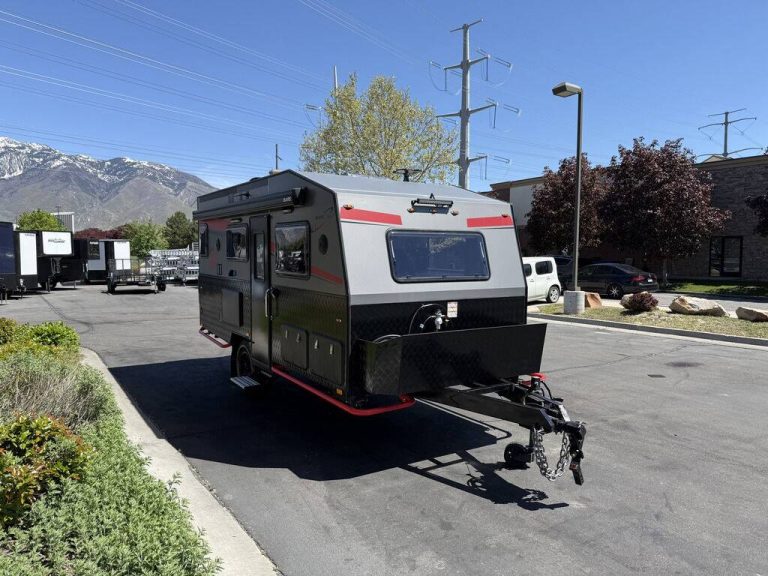
They are reinforced towable units engineered for remote travel, off-grid camping, and multi-terrain overlanding, featuring durability, self-sufficient systems, and high-mobility suspension for extreme outdoor environments.
Introduction — What Is a 4×4 Off Road Camper Trailer?
When you think of traditional travel trailers or campers, they are often suited for paved roads, established campgrounds, and fair-weather trips. But a 4×4 off road camper trailer is purpose-built for far more demanding conditions. It is designed for gravel roads, mud, sand, mountain tracks, jungle tracks — wherever standard trailers fear to tread.
Core features include:
A 4×4-capable tow / hitch / chassis platform (or one compatible with off-road tow vehicles)
Off-road suspension and high ground clearance
Rugged protective body and undercarriage (skid plates, rock guards, reinforced frame)
Self-sufficient systems for power, water, and utilities — enabling truly off-grid camping or remote travel
Global Market Context & Demand
On a global scale, the off-road camper trailers market — covering rugged trailers for uneven terrain — is projected to grow substantially: the market size is forecast to roughly double by 2032 under a CAGR around 9–11%.
Regions with established overlanding culture — such as Australia / New Zealand, Europe, and emerging Asia-Pacific (APAC) markets — are increasingly adopting off-road trailers, as disposable income rises and interest in outdoor adventure travel grows.
4×4 Off Road Camper Trailers vs Standard Travel Trailers
| Category | Standard Travel Trailer | 4×4 Off Road Camper Trailer |
|---|---|---|
| Chassis & Body | Road-oriented chassis; minimal under-body protection | Reinforced chassis, skid plates, rock guards, rust / impact coatings |
| Mobility & Terrain | Suited for paved roads, RV parks, mild gravel | High ground clearance, off-road suspension, all-terrain tires, stable tow geometry |
| Off-Grid Capability | Often relies on campground hookups (electricity, water, sewage) | Built-in water tanks/filtration, large battery/solar, independent utilities for off-grid use |
| Weather & Environment Adaptability | Basic insulation / climate control | Robust sealing and insulation, weatherproof build, four-season readiness |
| Use Cases | Weekend trips, vacations, campgrounds | Remote travel, wilderness overlanding, deserts, mountains, jungles, long off-grid trips |
Because of these differences, a 4×4 off road camper trailer isn’t just a “tougher trailer” — it’s a fundamentally different category, built for mobility, independence, and durability in unpredictable environments.
Key Features of 4×4 Off Road Camper Trailers
When evaluating or designing a durable 4×4 off road trailer — or simply understanding why one is necessary — there are several key features and capabilities to look for:
Durability & Protection
Reinforced frame and torsion-resistant body design.
Underbody protection: skid plates, rock guards, stone-chip-resistant coatings — critical when traversing gravel or rocky tracks.
Robust tow points and attachment systems to handle stress from uneven terrain, heavy loads, and dynamic movement.
Off-Grid & Self-Sufficient Systems
Onboard water storage with filtration/purification for remote travel.
Large-capacity battery bank (or modern lithium systems) + optional solar panels — enabling electricity without hookups.
Independent cooking, refrigeration, and waste/grey-water systems so travelers aren’t tethered to developed campgrounds.
Multi-Terrain Suspension & Mobility
Heavy-duty independent or multi-axle suspension (coil, air, or combination) to absorb shocks and maintain stability off-road.
All-terrain tires and off-road rated undercarriage clearance — enabling travel through sand, mud, coarse gravel, or uneven ground.
Tow-vehicle compatibility for 4×4 rigs (SUVs, 4×4 pickups), ensuring sufficient traction and power when towing over challenging terrain.
Climate & Weather Resistance
Four-season insulation and sealing to deal with cold mountain nights, desert heat, or heavy rain / humidity.
Waterproof and weather-sealed doors, windows, ventilation systems.
Efficient ventilation, moisture control, and optional heating/cooling systems to maintain comfort in varied environments.
These features enable “durable 4×4 off road camper trailers” to thrive where standard trailers would fail.
How to Choose a 4×4 Off Road Camper Trailer — Step-by-Step Checklist
If you’re considering buying or building a 4×4 off road camper trailer, here’s a practical checklist to ensure you get a rig suited to remote travel, overlanding, or off-grid camping:
Clarify Your Travel Goals: Are you planning desert overlanding, mountain trips, jungle/sand travel, or mixed-terrain adventures? Your geography dictates required specs.
Examine the Chassis and Frame: Look for reinforced frames, underbody protection, structural robustness for off-road stress.
Check Suspension & Ground Clearance: Independent or multi-axle suspension with adequate travel; high ground clearance; off-road rated tires.
Evaluate Off-Grid Capabilities: Water tanks & filtration, battery/solar systems, off-grid power, waste handling — essential for remote stays.
Inspect Climate & Weather Readiness: Proper sealing, insulation, ventilation — especially if you plan multi-season or extreme-weather travel.
Assess Interior Layout & Living Functionality: Storage capacity, sleeping configuration, cooking/waste utilities, comfort for extended stays.
Only when a trailer meets all these criteria can it be considered a true 4×4 off road camper trailer — ready for remote travel, overlanding, and off-grid camping.
How to Prepare a 4×4 Off Road Camper Trailer for Overlanding
Once you have (or plan to acquire) a suitable trailer, proper preparation is key. Here’s a practical “preparation checklist / setup guide”:
Energy planning: Install or upgrade solar panels, battery banks, efficient LED lighting, power-saving appliances — to maximize off-grid endurance.
Water management: Use onboard water tanks + filtration; plan refill points; bring spare containers; check seals and plumbing.
Tire and tow-vehicle readiness: Confirm proper tire pressure, off-road tires, functioning suspension; ensure tow vehicle’s 4×4 capability and proper hitch setup.
Equipment for terrain & recovery: Include recovery gear, tow straps, off-road tools, spare tires, jack, spare parts — essential for remote rough travel.
Packing smart for multi-environment travel: Prepare for desert heat, mountain cold, rain/humidity — bring proper clothing, bedding, ventilation, sealing kits.
Safety and navigation: GPS/offline maps, satellite communication, first aid, extra fuel/water — for remote travel away from infrastructure.
This level of preparation converts a trailer into a mobile basecamp, capable of supporting extended overlanding and off-grid adventures.
Use Cases & Real-World Scenarios
Here are several typical scenarios where 4×4 off road camper trailers shine — demonstrating their versatility:
Desert overlanding / sand dunes — remote tracks, dry desert terrain where standard trailers risk getting stuck. High clearance, all-terrain tires, robust chassis essential.
Mountain and forest trails — gravel/mud roads, uneven terrain, narrow forest trails. Off-road suspension and protective underbody make difference.
Multi-climate adventures — for instance, combining cold mountain nights, hot desert days, and rainforest humidity. Climate-resistant build, insulation, and versatile systems required.
Long-distance, cross-country travel — over months, across varied terrains and geographies: requires self-sufficiency, durability, reliability.
Overlanding + remote work or long-term travel lifestyle — with solar/battery systems, independent utilities, trailer can serve as a mobile home base for extended stays in remote locations.
These use cases highlight why many adventurers choose 4×4 off road camper trailers for overlanding or for remote travel, rather than standard caravans.
Maintenance & Durability — Keeping Your 4×4 Off Road Camper Trailer Ready
To ensure your trailer remains reliable over years of rugged travel:
Regularly inspect suspension components, tires, wheel bearings, hitch/tow connections — especially after rough off-road trips.
Maintain and examine undercarriage protection (skid plates, rock guards) for dents, cracks, or corrosion — essential for ongoing safety.
Check seals and weatherproofing annually — windows, doors, joints — especially before rainy or humid seasons.
Maintain power and water systems — battery health, solar panels, water tanks/filters — ensure no leaks, degradation, or malfunctions.
Carry spare parts and recovery gear — spare tires, suspension spares, plumbing/seal kits — for remote troubleshooting.
With proper maintenance, a quality 4×4 off road trailer can deliver years of dependable service, even under demanding conditions.
FAQ — Common Questions About 4×4 Off Road Camper Trailers
Q: What makes a 4×4 off road camper trailer different from a regular trailer?
A: It has reinforced chassis and underbody protection, off-road suspension, all-terrain tires, self-sufficient utilities (power, water), and climate/weather-resistant build — enabling travel over rough terrain and living off-grid.
Q: Are 4×4 off road camper trailers suitable for extreme weather?
A: Yes — if equipped with proper insulation, sealing, ventilation/climate systems, they can handle a wide variety of environments: deserts, mountains, forests, rainforests, cold or hot climates.
Q: How long can a well-equipped trailer support off-grid living?
A: It depends on energy storage, water capacity, waste handling, and user habits, but with a good setup (solar + battery, water + filtration, food storage) a trailer can support multiple days to weeks of self-sufficient off-grid camping.
Q: Is a 4×4 off road camper trailer a good choice for first-time buyers/overlanders?
A: Yes — if you choose a setup with balanced specs (durable chassis, off-road suspension, basic self-sufficiency systems), and if you plan and prepare carefully. The growing rental and sharing culture in overlanding also lowers entry barriers.
Q: What should I inspect before buying or building one?
A: Key checks include — chassis strength, suspension quality, ground clearance, underbody protection, tow-vehicle compatibility, off-grid power/water systems, insulation and sealing, interior layout and utilities suitability for remote use.
Conclusion
In an age where adventure, mobility, and self-reliance are increasingly valued, 4×4 off road camper trailers represent a powerful evolution of traditional travel trailers — combining rugged construction, off-road mobility, and self-sufficient systems.
From deserts to mountains, jungles to remote wilderness, these trailers deliver the flexibility, durability, and independence needed for genuine overlanding and off-grid living. Market data shows this is not a passing trend: global off-road trailer demand projected to grow sharply through 2032, now is a strategic moment to embrace or produce content, products, or conversions oriented around 4×4 off road camper trailers.